
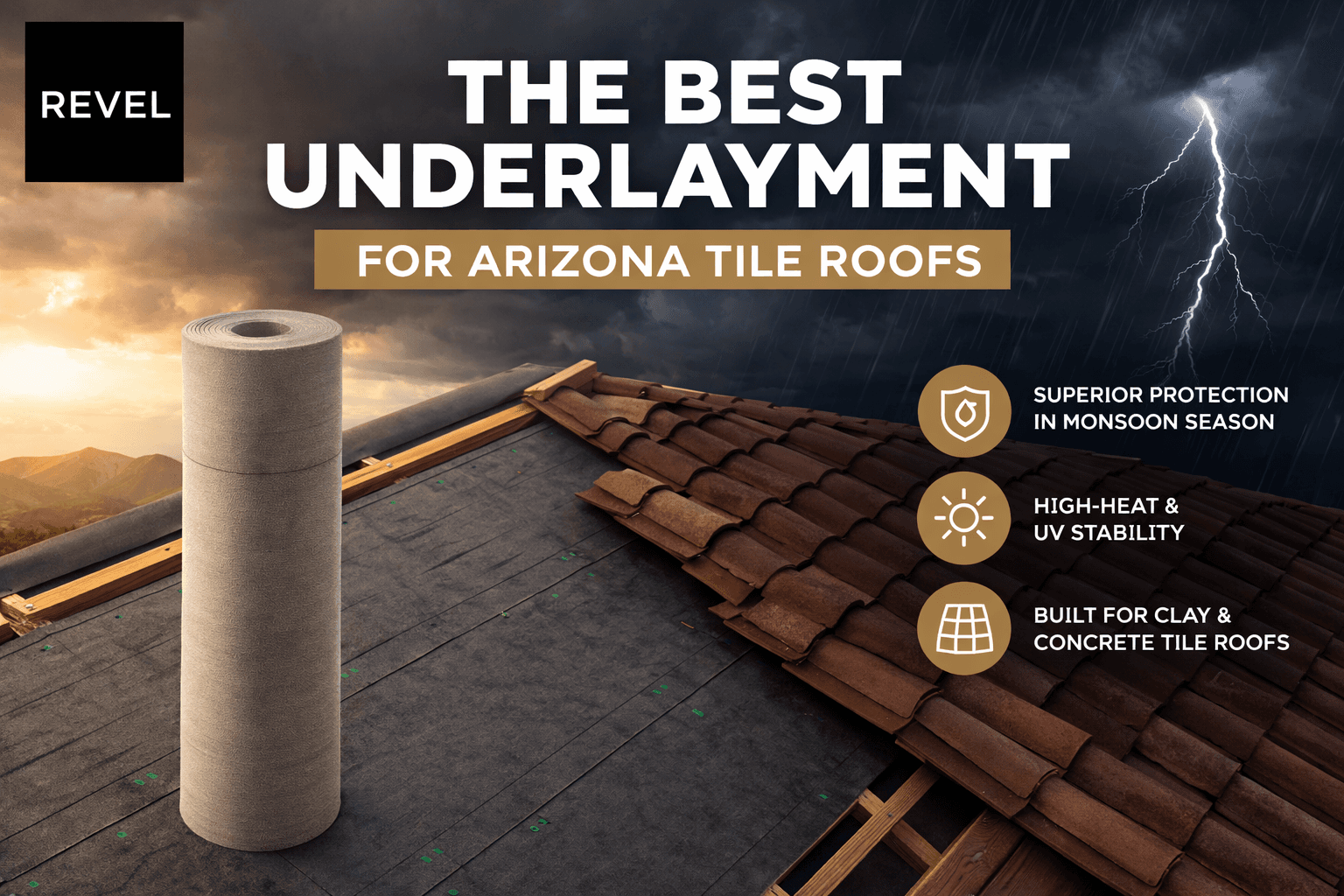
Best Underlayment for Tile Roofs: Peel & Stick Products Explained
Share this Article
When it comes to tile roofing, the underlayment is one of the most important — and most overlooked — components of the system. It's the last line of defense between your tile and the structural deck below. In Arizona's extreme heat and occasional monsoon storms, choosing the right underlayment isn't just a best practice — it's essential.
In this guide, we'll break down the best underlayment options for tile roofs, with a focus on modern peel-and-stick (self-adhering) products that outperform traditional felt in nearly every way.
Why Underlayment Matters More Than You Think
Tile roofs are not waterproof by themselves. Water can and does get underneath tiles through wind-driven rain, thermal expansion gaps, and damaged or displaced tiles. The underlayment is what keeps that water from reaching your decking and interior.
In hot climates like Phoenix and Scottsdale, traditional 30 lb. felt paper can dry out, crack, and fail within a few years. That's why the industry has largely moved toward self-adhering, rubberized asphalt membranes — commonly known as peel-and-stick underlayments.
What Is a Peel-and-Stick Underlayment?
Peel-and-stick (also called self-adhering) underlayments bond directly to the roof deck without nails or staples. They create a watertight seal around penetrations, at valleys, and along the entire deck surface.

